
I have been engaged in discussions with young students and individuals about my faith. Upon learning about my life story and the impact of God in my life, they find inspiration. I do not attribute this to my own merits, as I consider myself merely a vessel utilized by the Spirit for the purpose of evangelism and proselytism.
Earlier this month, I received an invitation from the University of Derby Christian Union to share my testimony during the Acoustic Night, an event organized for freshers. Knowing that the audience would comprise both Christians and non-believers, I chose to narrate my life experiences and conclude with a brief sermon. I particularly emphasized the role of the Holy Spirit as our ultimate source of solace and support.

In 2014, a significant turning point occurred in my life while I pursued my Master of Science (MSc) studies at the University of Southampton. From a faith perspective, I was a bewildered young man, oscillating between identifying myself as Muslim, Agnostic, and Atheist. Faith, at that time, did not hold much significance for me. Typically, my weekends were spent at home, browsing the internet, cooking, and listening to music. However, one day, unexpectedly, everything changed. I received a Skype call from my father to convey Eid Greetings, a significant day for Muslims. We conversed for about an hour, exchanging pleasantries and discussing our day. The call concluded with laughter and jokes. Approximately two hours later, a close family friend, like an uncle to me, phoned my mobile. After extending Eid Greetings, he uttered words that shook me to the core: “Son, never think you are alone or orphaned”. Perplexed, I inquired what he meant. He replied, “Son, a few minutes ago, your dad passed away… despite our efforts, we couldn’t save him!” It was in that moment I comprehended the essence of loneliness and the dire need for a friend or a comforter who could provide solace.
Fred Rogers, once wrote in his book a very interesting quote.
When I was a boy and I would see scary things in the news, my mother would say to me, “Look for the helpers. You will always find people who are helping.” To this day, especially in times of “disaster,” I remember my mother’s words, and I am always comforted by realizing that there are still so many helpers-so many caring people in this world.
Fred Rogers, The World According to Mister Rogers: Important Things to Remember

We have all encountered moments of grief or adversity, seeking nothing more than words infused with love, compassion, and comfort. During my father’s passing, questions inundated my mind: Where is he now? What transpires after death? What is my purpose? Is there more to life?
The night before His departure, Jesus consoled His disciples, who were filled with trepidation about His leaving, with these words:
He Helper (Comforter, Advocate, Intercessor—Counselor, Strengthener, Standby), the Holy Spirit, whom the Father will send in My name [in My place, to represent Me and act on My behalf], He will teach you all things. And He will help you remember everything that I have told you.
– John 14:26 Amplified Bible (AMP)
Jesus didn’t articulate these words solely for the comfort of the Twelve who accompanied Him. He conveyed them as encouragement for us all, as we confront the harsh realities of life. Acknowledging our need for assistance, He signifies that there’s no better source of aid than the Creator Himself – the King of Kings. This stands as a profound promise for the children of God.
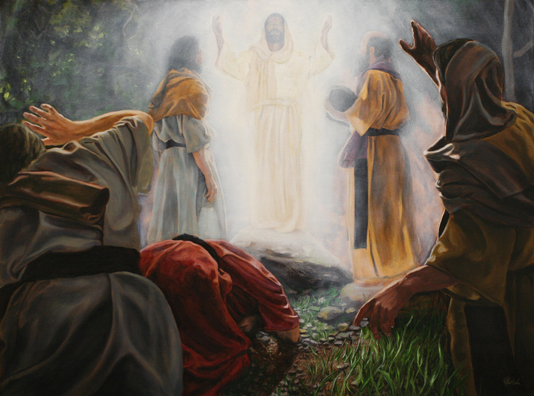
While engaging in conversations with Muslims and sharing our beliefs, they often refer to a particular verse to support the idea of Muhammad being the prophet of Islam. However, as Christians, we respectfully disagree with this interpretation. According to the Bible, we believe that the Comforter mentioned in the scripture refers to the Holy Spirit. There is no ambiguity regarding this matter. Therefore, based on the explicit teachings of the Bible, we do not consider Muhammad to be the Comforter. It is crucial to understand the context of any passage of Scripture to truly comprehend its meaning. In the book of John, Jesus spoke these words during His final moments with His disciples before His crucifixion and resurrection. He shared these intimate words specifically with His closest companions, emphasizing what lay ahead for them. It is important to remember the depth of Jesus’ relationship with His disciples and His desire for them to understand the truth.
A closer examination of earlier verses 16 and 17 provides clarity on the subject matter. Verse 16 assures that the Comforter would be perpetually present with these disciples. Muhammad could not fulfil this role, as he was born over 500 years later, after the deaths of these disciples, in around 570 AD, passing away approximately in 632 AD.
Verse 17 emphasizes that the Comforter already dwelt among the disciples and would eventually be ‘in’ them. The Holy Spirit entered and resided within the disciples. Muhammad couldn’t fulfil the role of the Comforter because he wasn’t present when Jesus spoke to his disciples, and he could never inhabit any of the disciples. The Greek term used is ‘en‘, signifying ‘right inside’. Jesus conveyed that the Comforter would be ‘right inside’ the disciples.
In conclusion, I pray that each of us encounters the Holy Spirit in our lives and finds guidance along the true path, in the name of Jesus. Amen!




 Moses Ali
Leave a reply to Richard Cancel reply